
Last updated November 22, 2026
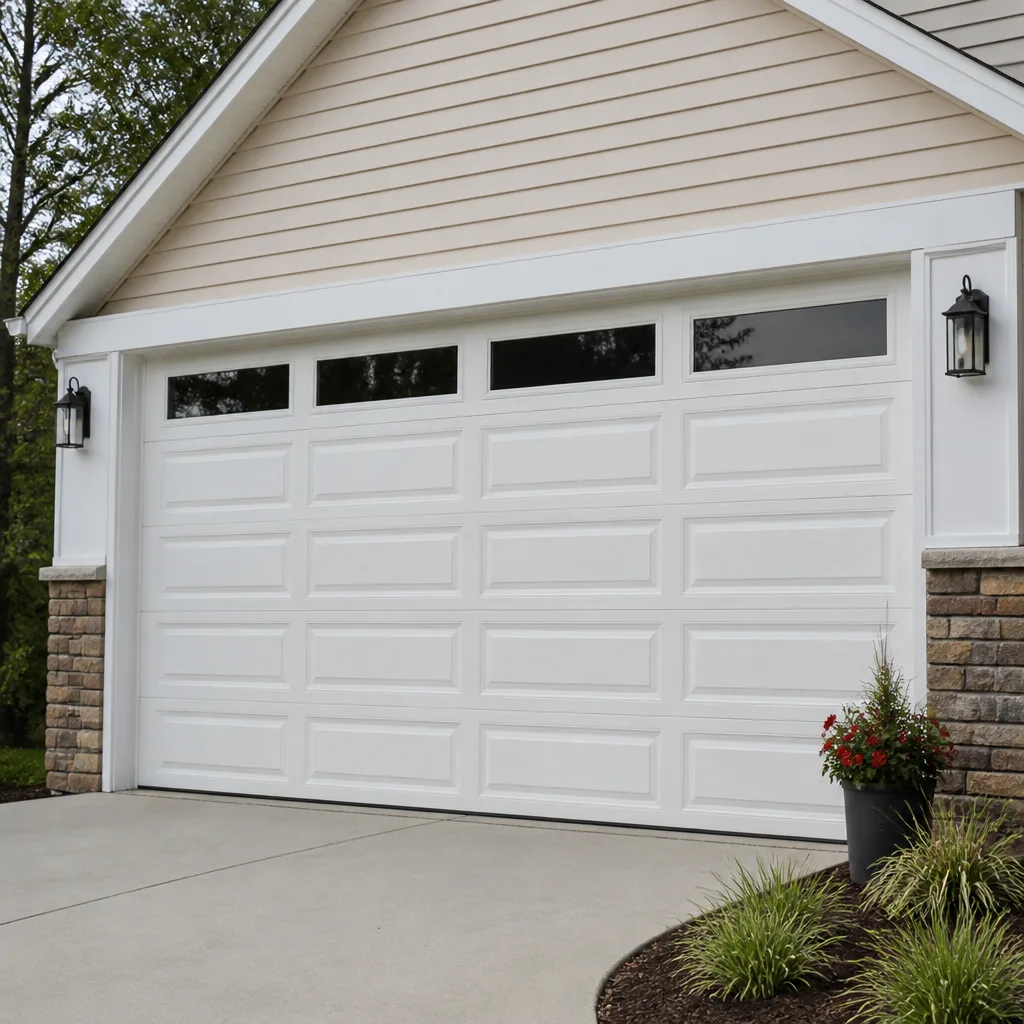 Raised-panel steel
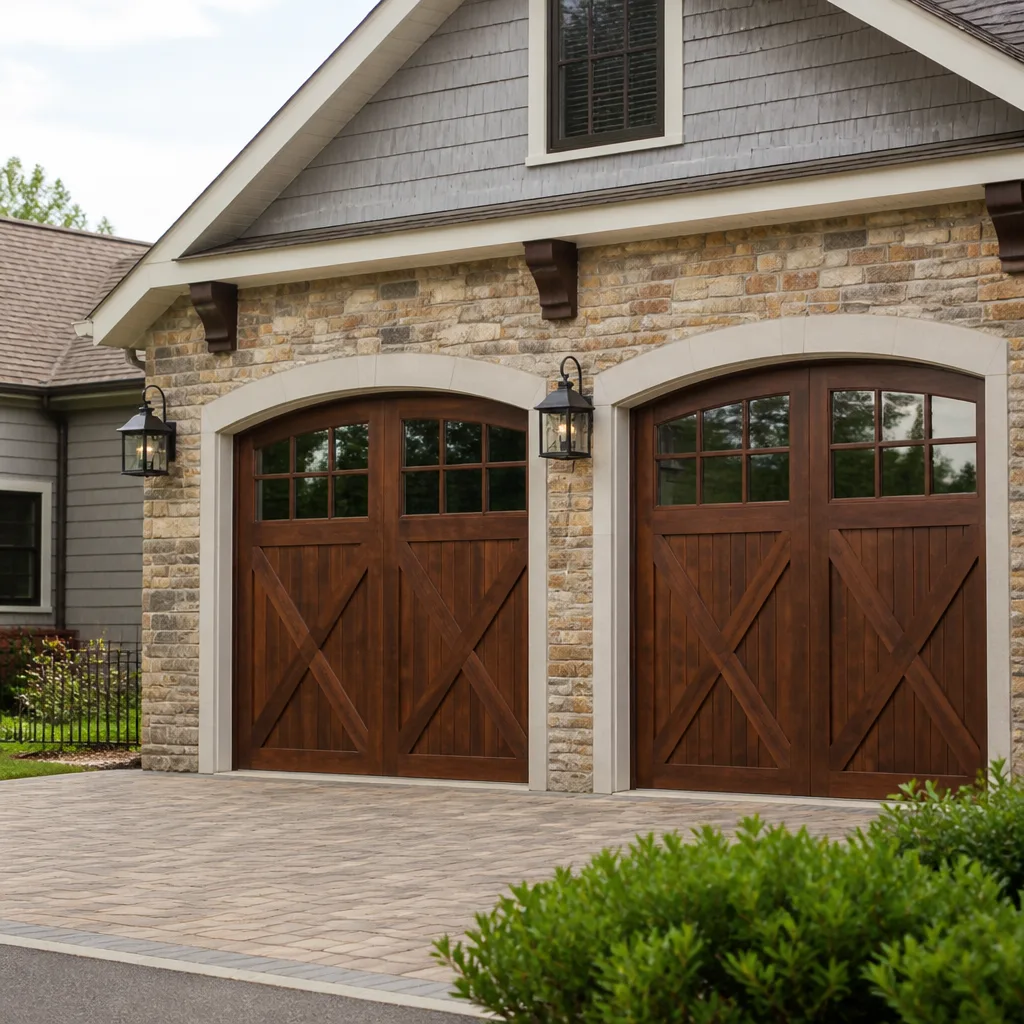 Carriage house
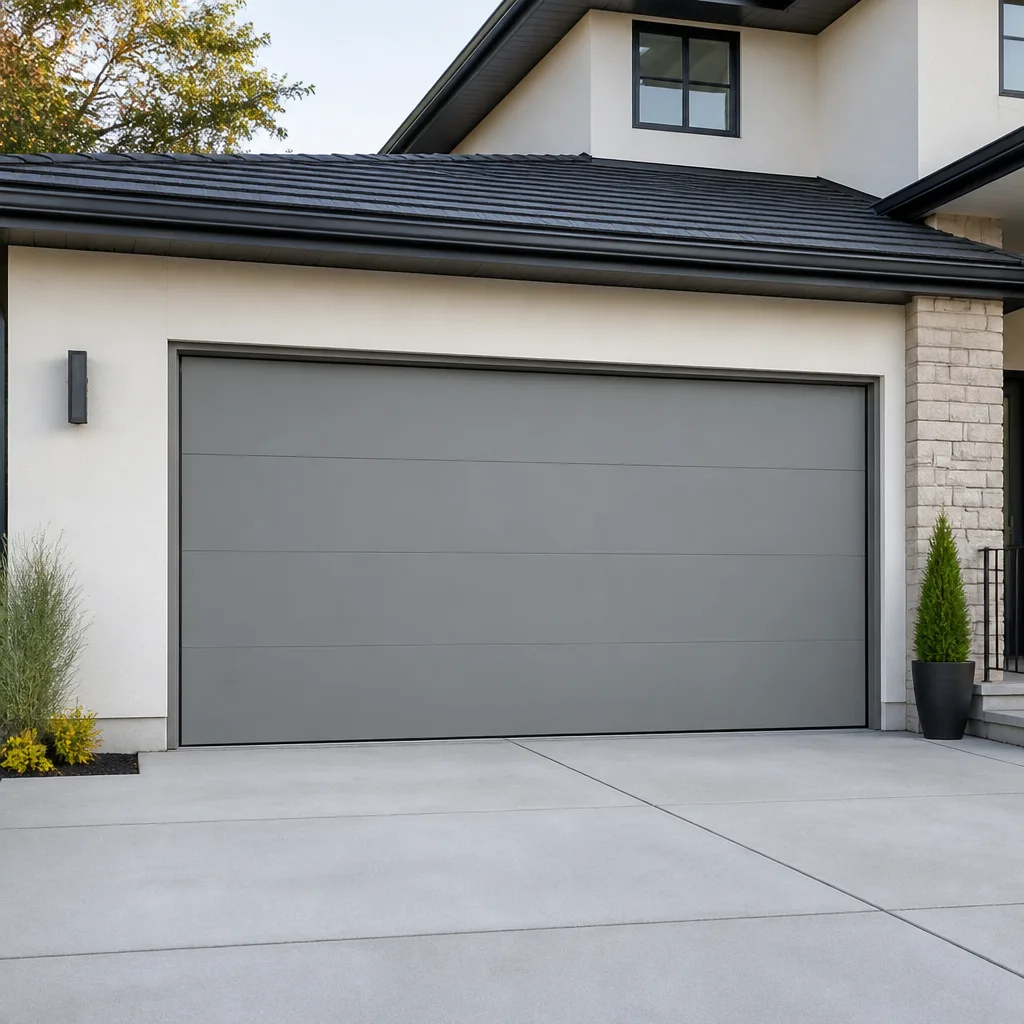 Modern flush
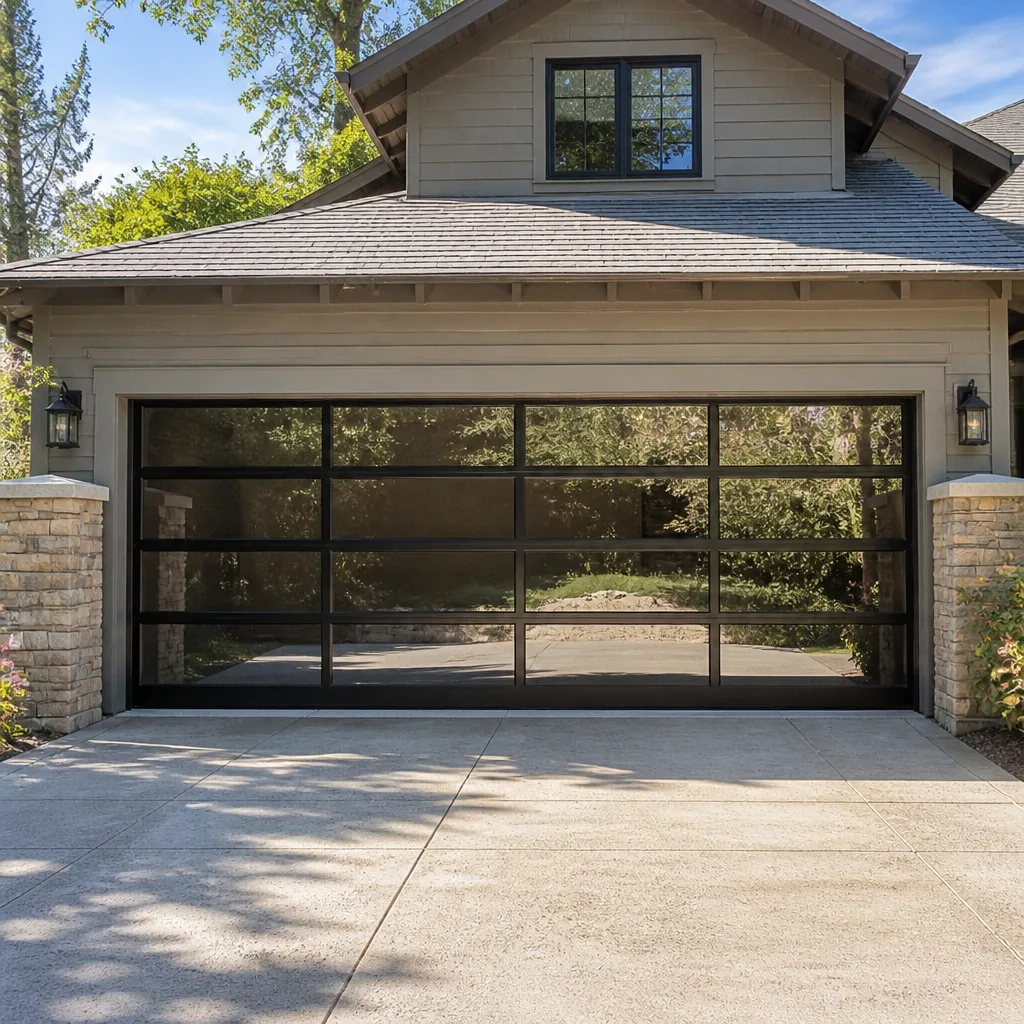 Full-view glass
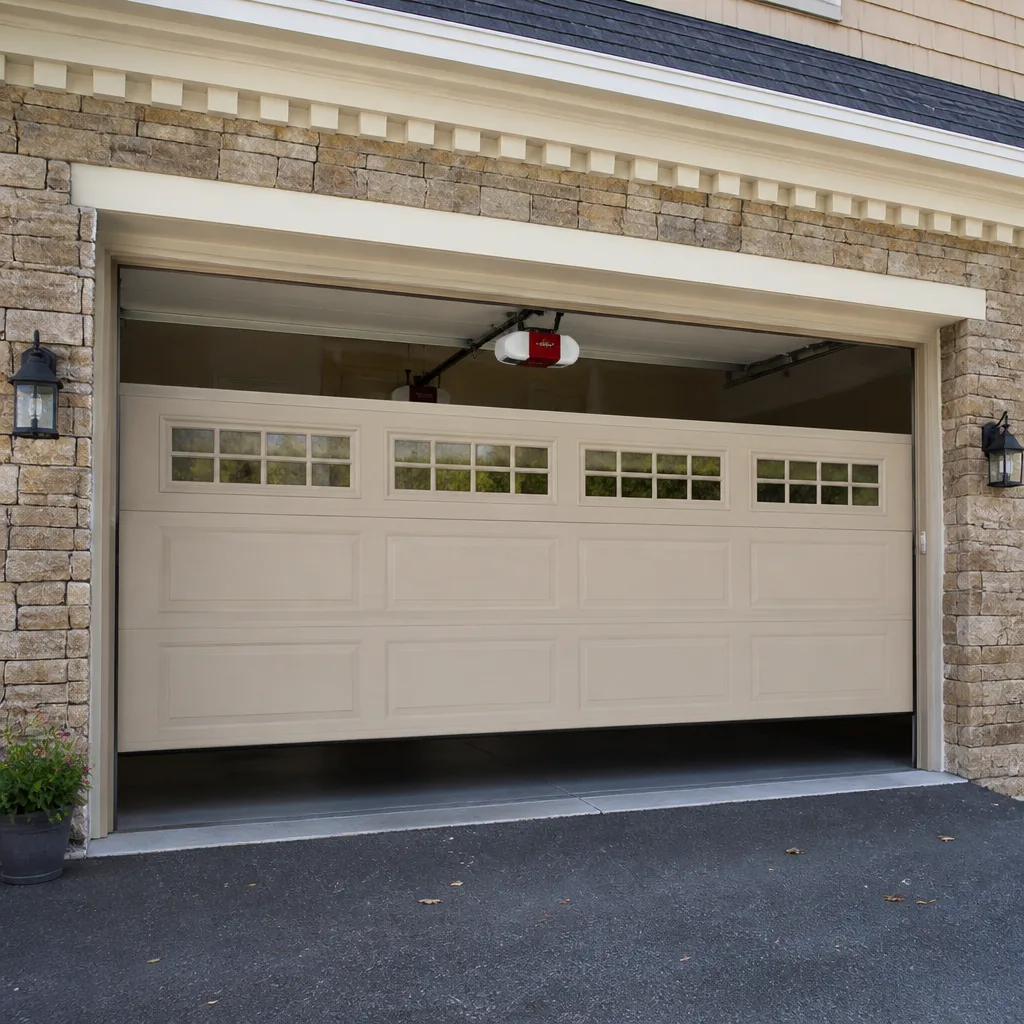 LiftMaster openers
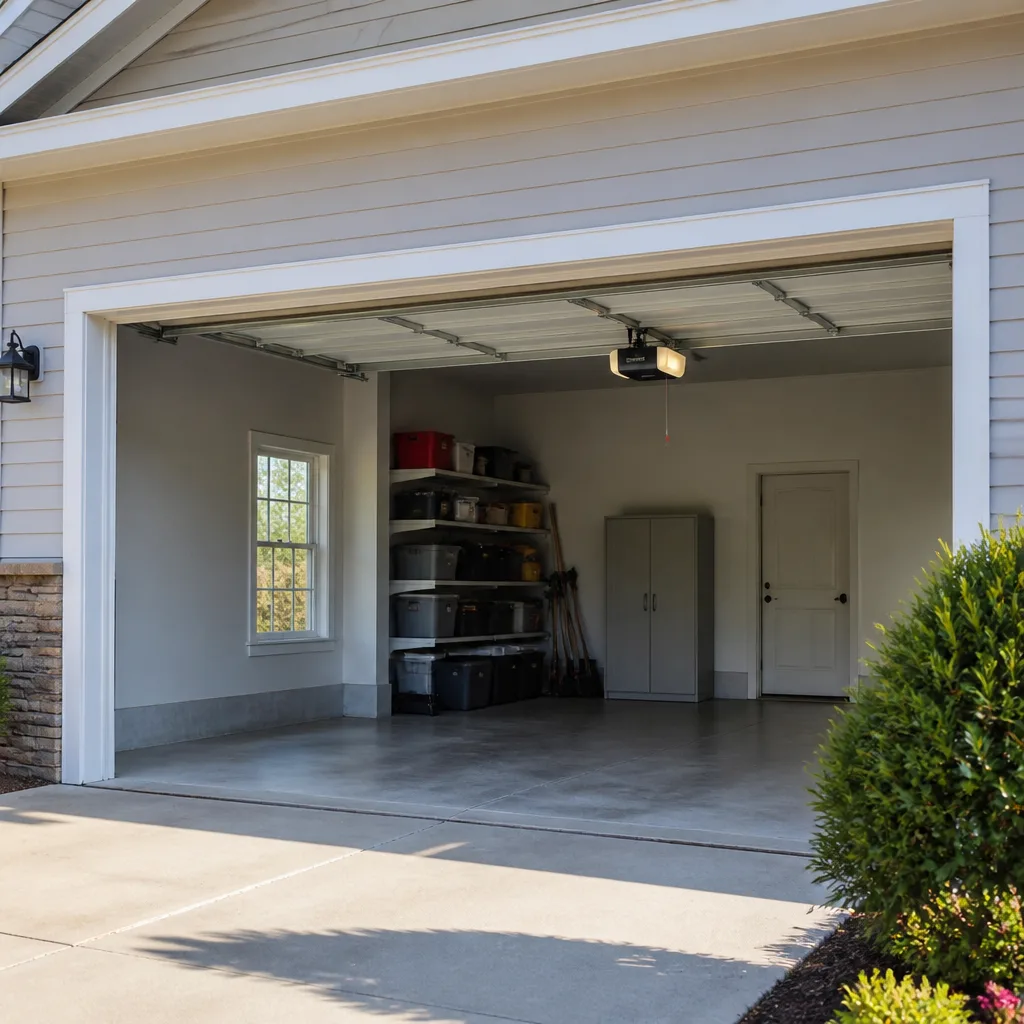 Chamberlain openers
Full 25-point door and opener safety check with every visit - springs, cables, rollers, tracks, and your LiftMaster or Chamberlain opener included
You get a price before we start. It does not change when the pro arrives.
Get your free estimateHow to Hire a Garage Door Contractor in Harvey Park: A Step-by-Step Guide
Most homeowners in Harvey Park who end up with a bad garage door experience didn’t hire a crook. They hired someone who answered their questions vaguely, and they accepted it. A “free estimate” that never says whether spring labor is included or dumped into a separate line is not an estimate at all. It’s a placeholder number to get a truck in your driveway. The gap between that placeholder and the invoice is where people get stung. This guide gives you the exact questions to ask, the red flags to watch for, and the verification steps that filter out generalists and bait-and-switch operators before they set foot on your property in Harvey Park.
Quick Answer
To hire a garage door contractor in Harvey Park, confirm three things before work begins: that the company specializes in garage doors rather than general handyman work, that the written estimate lists parts and labor as separate line items with part numbers, and that the technician can explain your spring system type and warranty terms in plain language. Ask for the estimate in writing and don’t approve any work until it matches what you were quoted.
Styles & brands we work with
- Raised-panel steel
- Carriage house
- Modern flush
- Full-view glass
- LiftMaster openers
- Chamberlain openers
Table of Contents
- Specialist vs. Generalist: Why It Changes the Diagnosis
- Questions to Ask Before You Agree to Any Work
- How to Verify a Colorado Contractor License
- Red Flags in a Garage Door Quote
- Why Three Spring Quotes Can Vary by $200
- Spring Work: What to Check and What Never to Touch
- What’s Different About Garage Doors in Harvey Park
- Parts, Brands, and Why Brand Familiarity Matters
Specialist vs. Generalist: Why It Changes the Diagnosis
A garage door is a balanced mechanical system under constant tension, wired to a motorized opener with safety sensors, and mounted to a building that shifts with the seasons. When something goes wrong, the symptom rarely points cleanly at the cause. A door that reverses halfway down could be a sensor misalignment, a worn roller, a failing logic board, or a spring that’s lost tension. A specialist reads those symptoms in a specific order. A generalist often starts with the piece they know best.
We’ve seen this play out in Harvey Park more than any other single issue: a homeowner calls a handyman for a noisy door, the handyman lubricates the hinges, the noise continues, and three visits later nobody has looked at the torsion spring. That’s not dishonesty. It’s a diagnostic gap that comes from working on doors as a side job instead of a trade.
Here’s what a garage door specialist brings to a diagnosis that a generalist typically doesn’t:
- System-level thinking. Springs, cables, rollers, tracks, panels, and the opener are checked as a connected system, not isolated parts.
- Brand familiarity. Knowing how a Chamberlain or Genie opener reports a fault code is faster than reading a manual on your driveway.
- Safety training on tensioned components. Torsion and extension springs store enough energy to cause serious injury. Many general repair services decline spring work outright, and that’s a reasonable choice for them. It’s also why you want someone who does it routinely.
- Parts access. A specialist can source a specific spring, cable, or opener component rather than telling you to order it yourself and call back.
The practical test is simple. Ask the person quoting your job what type of spring system your door uses. A specialist answers immediately. A generalist goes quiet, then says something about “taking a look.” That pause tells you what the whole visit will feel like.
Questions to Ask Before You Agree to Any Work
These are the questions that separate a real estimate from a number scribbled on a business card. Ask them on the phone, before anyone comes out. The answers take thirty seconds and save you a lot of grief.
- “Do you work on garage doors as your primary trade?” You want to hear a clear yes. Not “we do a bit of everything.”
- “What spring system does my door use, and how do you determine that?” The answer should reference torsion or extension and mention actually looking at the door. Nobody can diagnose a spring over the phone, but they can tell you how they’ll check.
- “Will the written estimate separate parts and labor?” This is the single most important question on the list. Bundled pricing hides what you’re actually paying for.
- “Which brand and part number will you install?” A real estimate names the spring gauge, the cable type, or the opener model. “Standard spring” is not a part number.
- “What does the warranty cover, and for how long?” Get the terms in writing. A warranty on parts and a warranty on labor are different things, and vague verbal promises vanish the moment the garage door closes on them.
- “Is the service call charge separate from the repair?” If there’s a fee just to show up, it should be stated up front, in writing, before you agree.
- “Who actually does the work?” Some companies subcontract. You want to know whether the technician arriving is trained on garage doors or is a general laborer sent out with a toolbox.
- “Will the price be confirmed before work starts?” The answer must be yes. The written estimate sets the final price.
If someone can’t or won’t answer these questions directly, that’s your answer. Move on. There’s no shortage of garage door professionals who can.
How to Verify a Colorado Contractor License
This is where a lot of homeowners get confused, so let’s clear it up. Garage door work isn’t licensed the same way electrical or plumbing work is. There’s no single statewide “garage door contractor license.” What applies depends on the scope of the job and where you are.
In Colorado, contractors performing work that requires a building permit generally need to hold a valid contractor license with the state, and many municipalities add their own registration or licensing requirements on top. Routine repairs and part replacements, like swapping a spring or a roller, often don’t require a permit. A full door replacement or structural modification to the opening usually does.
Rather than trying to memorize which category your job falls into, do this:
- Ask the contractor whether your specific job requires a permit. A specialist knows the answer for common jobs and tells you plainly.
- If a permit is needed, ask who pulls it. The answer should be the contractor, not you.
- Ask for their state contractor license information if the job requires one, and verify it through the Colorado Secretary of State or the state licensing authority. That’s a public record and takes minutes.
- Ask whether Harvey Park or the surrounding jurisdiction has any additional local registration requirement. If they don’t know, call your city’s building department and ask directly. They’ll tell you.
- Ask for proof of insurance. A legitimate contractor carries liability coverage for the job. If they can’t produce a certificate, that’s a hard stop.
One more note specific to this area: if your home sits within a homeowners association, check the HOA rules on door replacement before you order anything. Color and style restrictions are common and are much easier to handle before a door arrives on a pallet than after.
Red Flags in a Garage Door Quote
Most bad garage door quotes aren’t obvious at first glance. They look reasonable until you compare the line items. Here’s what to watch for, ranked roughly by how often we see them cause problems for homeowners.
- Vague line items. “Spring replacement” with no gauge, no cycle rating, and no indication of whether a matched pair is included. A spring quote should tell you exactly what’s being installed. Remember that a matched pair costs roughly twice a single spring, so a quote that reads like a pair but prices like a single is a question worth asking.
- Missing part numbers. If the estimate names a part, you should be able to look it up. No part number, no accountability.
- Labor bundled into a “service fee.” This is the classic structure that keeps you from comparing quotes. Every estimate you collect should break out parts and labor separately so you can line them up side by side.
- A price given before anyone has looked at the door. A range over the phone is fine. A firm number without an inspection is a sales tactic, not an estimate.
- Pressure to approve on the spot. A legitimate contractor will hand you the written estimate and let you decide.
- No written warranty. Verbal warranties on garage door work are worth exactly what you paid for them.
- Diagnosis by symptom only. “It’s your spring” without opening the door panel, checking the cables, or testing the opener is a guess. Guesses cost you money twice.
Any one of these alone is worth a follow-up question. Three or more in one quote is a signal to get another estimate.
Why Three Spring Quotes Can Vary by $200
You call three companies for a torsion spring replacement on the same door, and you get three prices that can swing $200 apart. It’s tempting to assume the cheapest is a deal and the most expensive is a ripoff. Neither is automatically true. Here’s what actually drives the spread.
- Parts quality. Springs are rated by cycle life, and a low-cycle spring costs less than a high-cycle one. A $200 spread can come entirely from which spring is being installed. Ask for the cycle rating on every quote.
- One spring vs. a matched pair. On many doors, springs are replaced in pairs because they wear together. A quote that prices one spring and installs one spring is a legitimate quote for a different job than one that prices a pair. Compare carefully.
- Labor included vs. labor extra. This is the biggest source of confusion. A quote that “includes installation” and one that lists labor separately can land close in total, but only if the first one actually covers the same scope.
- Warranty length. A longer warranty has a cost built in. That’s not a bad thing, but it explains part of the gap.
- Service call structure. Some quotes fold a trip charge into the total, some list it separately, and some don’t charge one. Look at the total cost of getting the door working, not just the top-line number.
The way to interpret a $200 spread is to compare scope, not price. Two quotes for the same spring type, the same labor scope, and the same warranty terms should land close together. If they don’t, one of the quotes is describing a different job than you think. Line up the estimates side by side and match every line. The gaps will tell you the story.
Spring Work: What to Check and What Never to Touch
Garage door springs are under extreme tension at all times, even when the door is closed. Torsion springs especially store enough energy that a single wrong move can cause serious injury. This is the one part of the garage door system where we give you information to help you recognize a problem, never instructions to fix it yourself.
What you can safely check:
- Listen. A loud snap from the garage, followed by a door that suddenly feels very heavy, usually means a spring has broken.
- Look, don’t touch. A visible gap in a torsion spring or a stretched-out extension spring is a confirmed problem. Look from a distance and note what you see.
- Test the feel. Disconnect the opener with the manual release and lift the door by hand a few inches. If it feels heavy or won’t stay put, stop and let it back down.
- Check the cables and brackets for visible wear from a safe distance. Fraying, kinks, or anything loose means it’s time for a pro to look.
What never to do: don’t try to wind, unwind, or adjust a torsion spring, don’t remove a spring bracket, and don’t try to release tension on a spring that’s broken. The hardware in that system can hurt you badly, and the tools required to handle it safely aren’t in a standard home toolbox. This is one of the few repairs where calling a professional is not a matter of convenience. It’s a matter of not getting hurt.
Our garage door repair technicians handle spring work routinely, including the diagnostic step first, so you know exactly what’s broken before any part is ordered.
What’s Different About Garage Doors in Harvey Park
Garage doors here work harder than most people realize. Front Range weather swings wide – hot summers, hard freezes, and the kind of late-season snow that lands heavy and melts fast. That cycle of expansion and contraction works on every joint in a door: the springs, the cables, the hinges, the rollers, and the opener’s track alignment. A spring that’s near the end of its cycle life in a mild climate can fail a year or two earlier here just from the temperature swings.
Harvey Park also has a lot of mid-century housing stock, which means a lot of garage doors and openers that are original or a generation or two away from it. Openers from the era before modern safety reversing systems are still out there. If your opener doesn’t have working safety sensors near the floor, that’s a conversation worth having. It’s a mechanical safety issue, not a convenience one.
Practical implications for hiring here:
- Ask how the contractor accounts for seasonality. A specialist knows that springs and cables fail more in temperature transition months and will factor the door’s age and cycle history into their recommendation.
- Ask about opener age and sensor operation. If the opener is old enough that parts are hard to source, that changes the repair-versus-replace math. A garage door opener repair conversation should include that tradeoff honestly.
- Check HOA and neighborhood character rules before replacing a door. A lot of homes in Harvey Park sit in neighborhoods with a specific look. New doors usually need to match it, and a contractor familiar with the area will flag that before you order.
- Consider the driveway and slope. Doors on sloping driveways wear unevenly and need track adjustments more often. Worth mentioning when you book the estimate.
The point isn’t that Harvey Park is unusual. It’s that local conditions shape what fails and when, and a contractor who understands that will give you a better recommendation than one working from a generic checklist.
Parts, Brands, and Why Brand Familiarity Matters
Most homes in Harvey Park have a door and opener from one of a handful of manufacturers. Clopay and Amarr doors are common, and openers from Chamberlain and Genie show up constantly. When a technician is already familiar with the brand in your garage, three things happen quickly: the diagnosis gets faster, the right part gets ordered the first time, and fewer visits are needed to finish the job.
Brand familiarity matters most in two situations:
- Diagnosing opener faults. Fault codes and reset procedures vary by brand and generation. A technician who works with the brand regularly reads the fault signal faster than someone thumbing through a PDF on your driveway.
- Sourcing the right part. A spring, cable, or opener component that’s out of stock at a general supplier can stall a repair for days. A specialist with parts access can source the right piece and finish the job in one visit rather than two.
When you get your estimate, ask which brand and model of part is going in. Then ask the contractor whether they work on that brand regularly. You’ll hear the difference between someone guessing and someone who knows. If you’re weighing replacing the door rather than repairing it, a specialist who works across brands will tell you which ones hold up better for your opening size and use. That’s part of the value of a real garage door installation conversation, and it’s a question worth asking before you commit to a model.
Common Mistakes to Avoid
- Hiring a generalist because the price sounded lower. A handyman quote often looks cheaper until the second visit, when the door still doesn’t work. A specialist diagnoses once and repairs once.
- Accepting a bundled price with no line items. You can’t compare what you can’t see. Ask for parts and labor broken out on every estimate before you decide.
- Not asking whether the spring quote is for one spring or a pair. These are different jobs at different prices. A matched pair costs about twice a single spring, so a quote that’s suspiciously low is likely for one.
- Skipping the warranty question. Verbal warranties disappear. Ask for the terms in writing, including how long parts and labor are each covered.
- Ignoring the opener when the door acts up. Half the “spring problems” we see start as an opener alignment or sensor issue. Get the whole system checked, not just the loud part.
- Assuming permits aren’t needed for a full replacement. Routine repairs usually don’t need one. A full door replacement often does. Ask the contractor, and if they can’t say, call your city’s building department. Harvey Park sits inside Denver, and the city’s building department is the authority on what applies to your property.
- Letting the cheapest quote win by default. Compare scope first, then price. Two quotes for the same spring, labor, and warranty should be close. If the gap is large, one of them is describing something different than what you think.
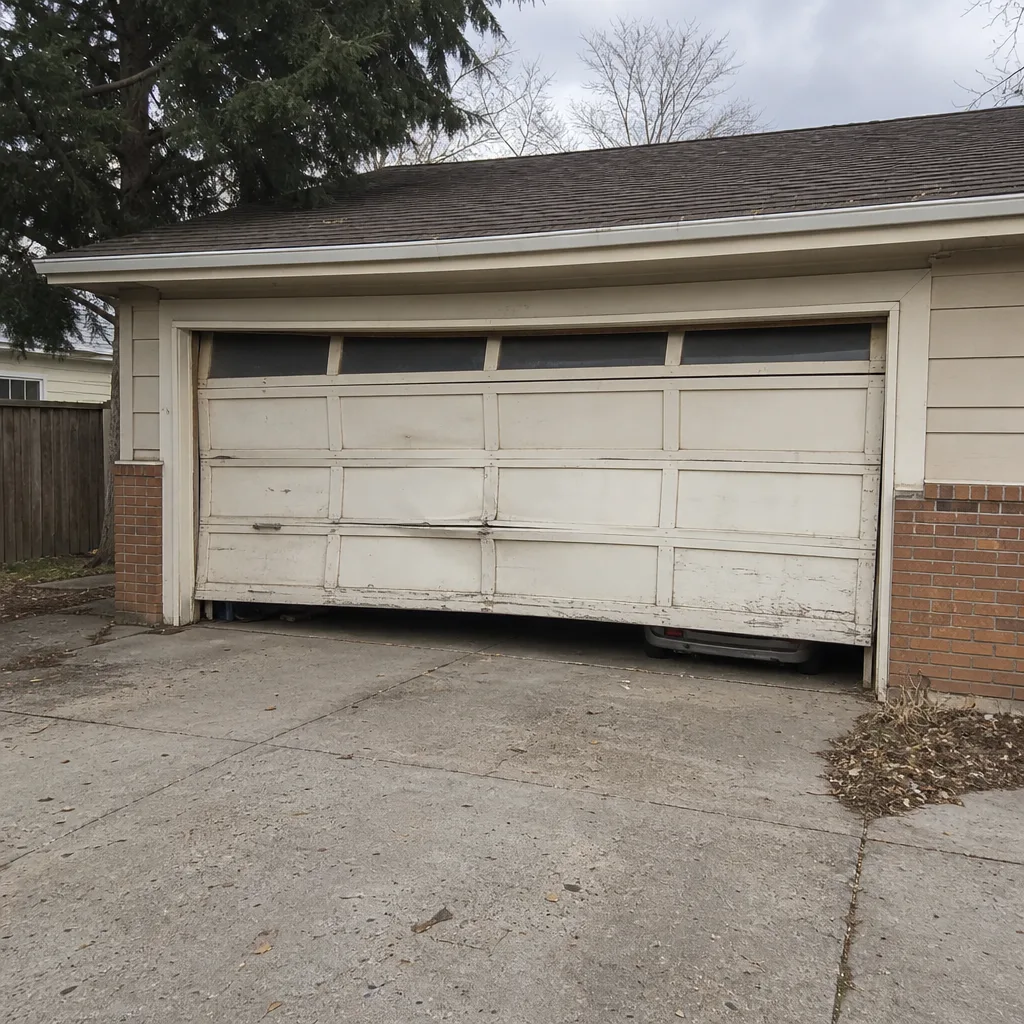
See the difference
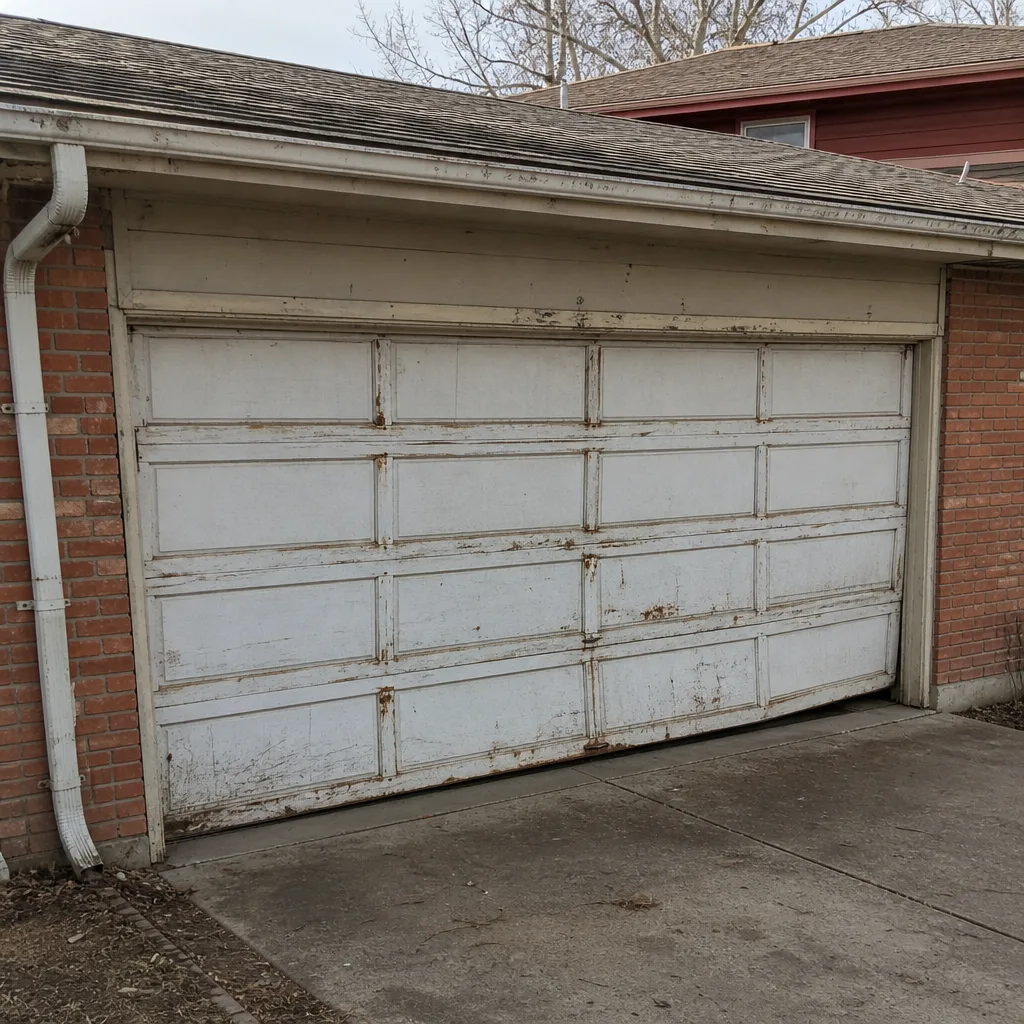 Before
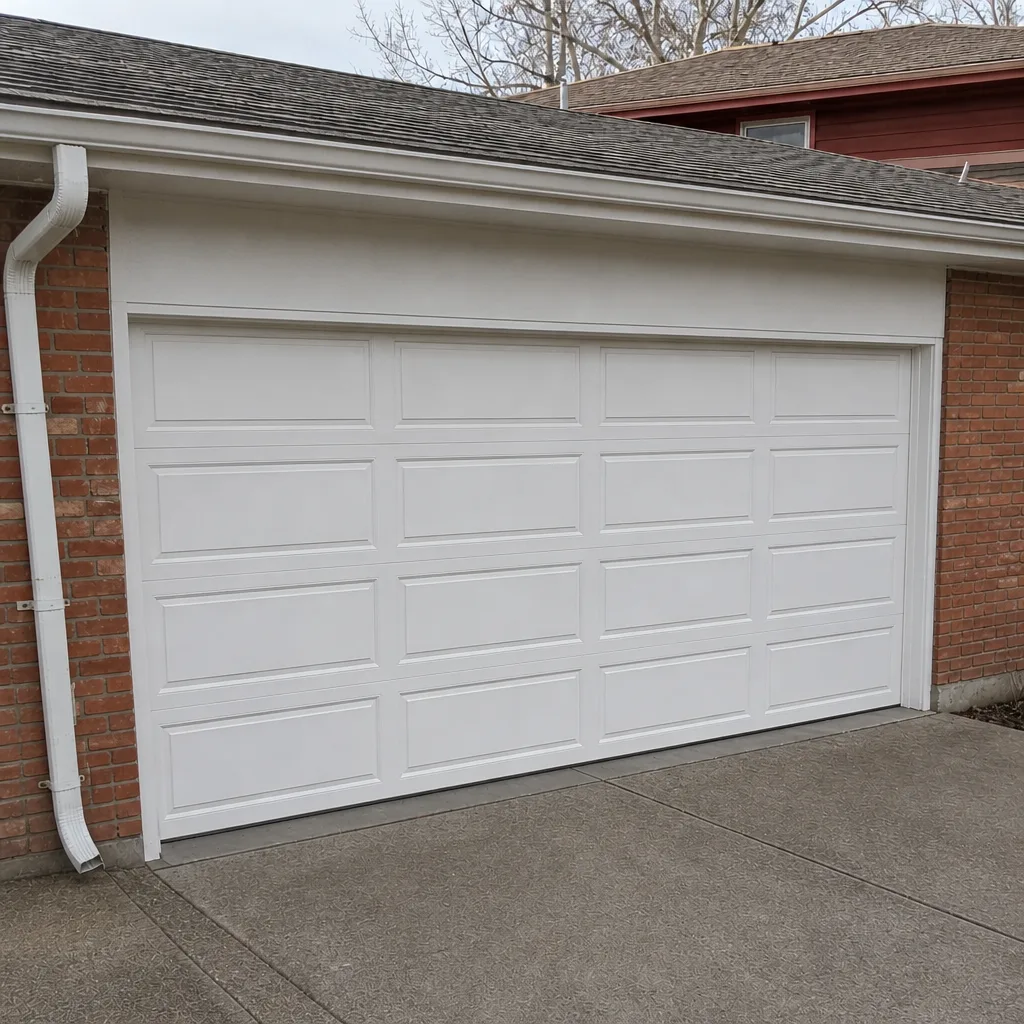 After
 Before
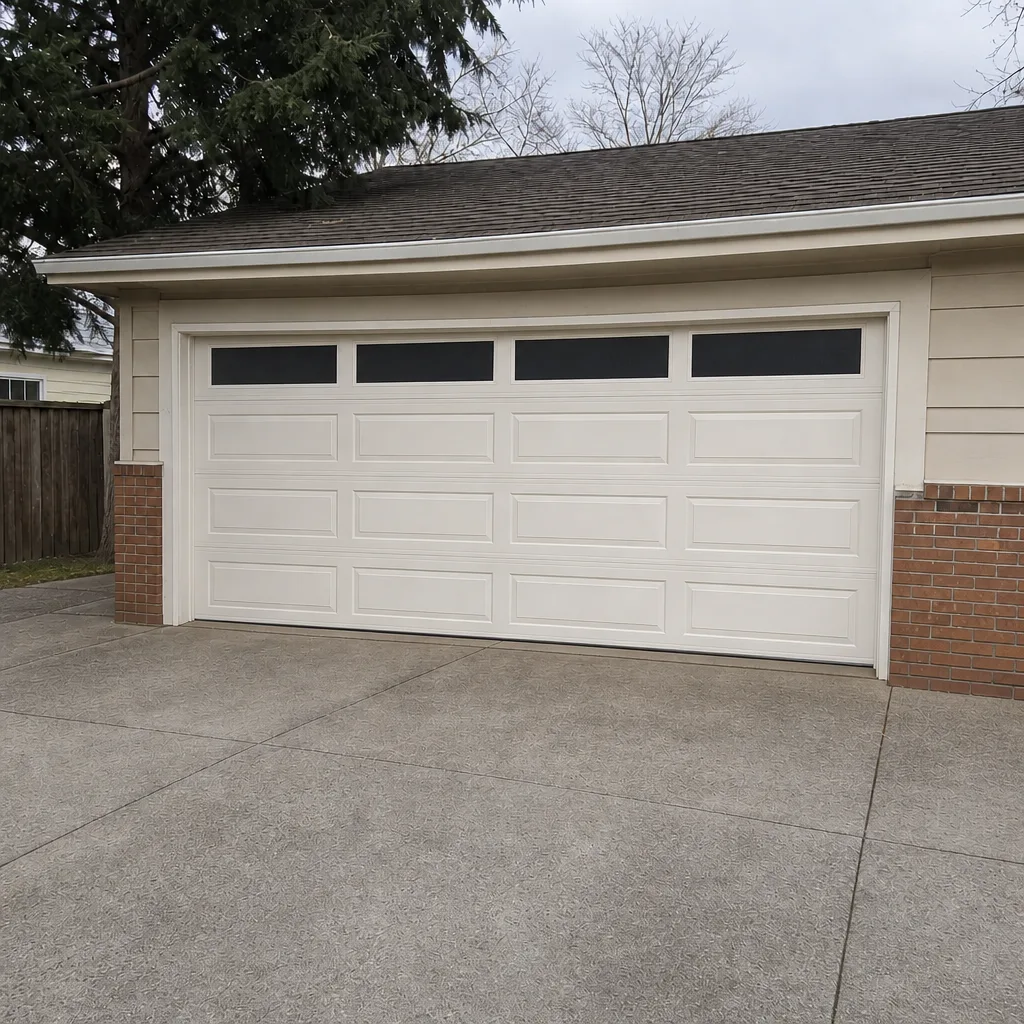 After
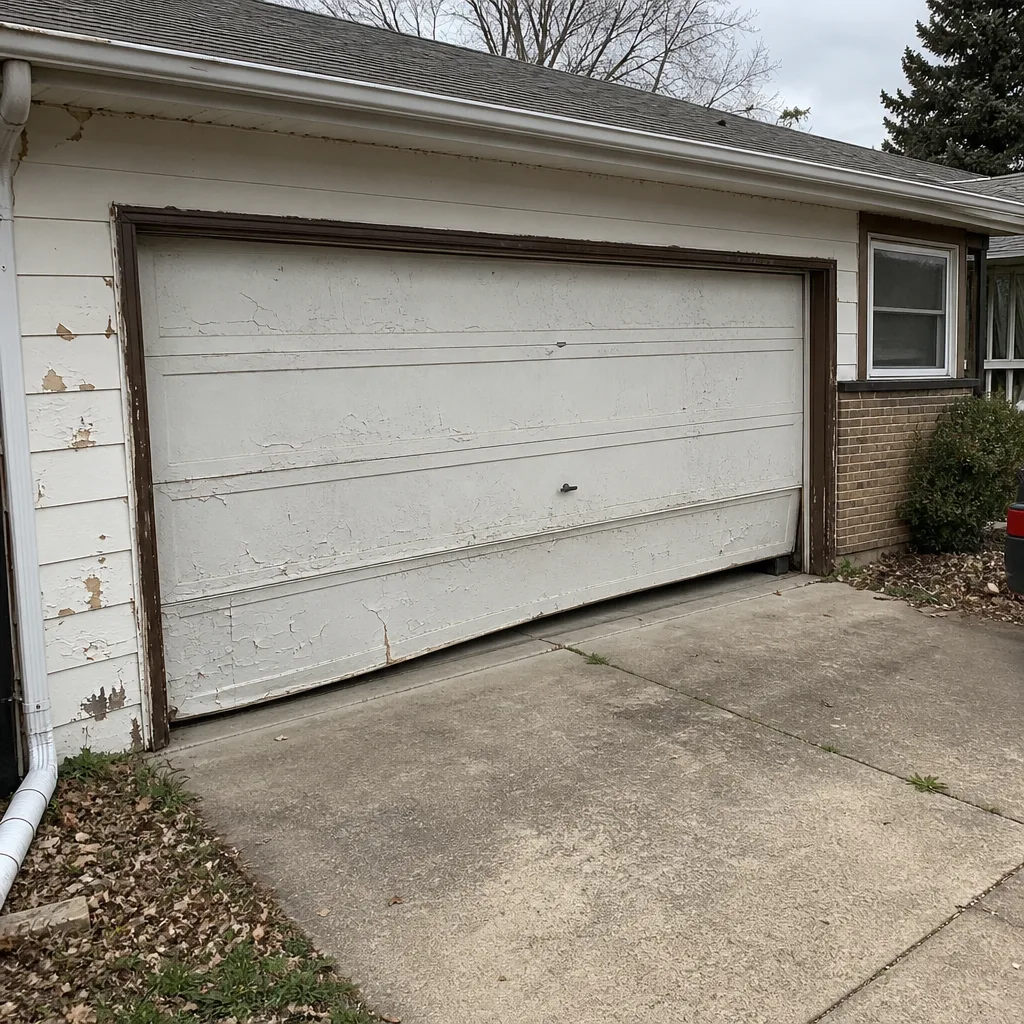 Before
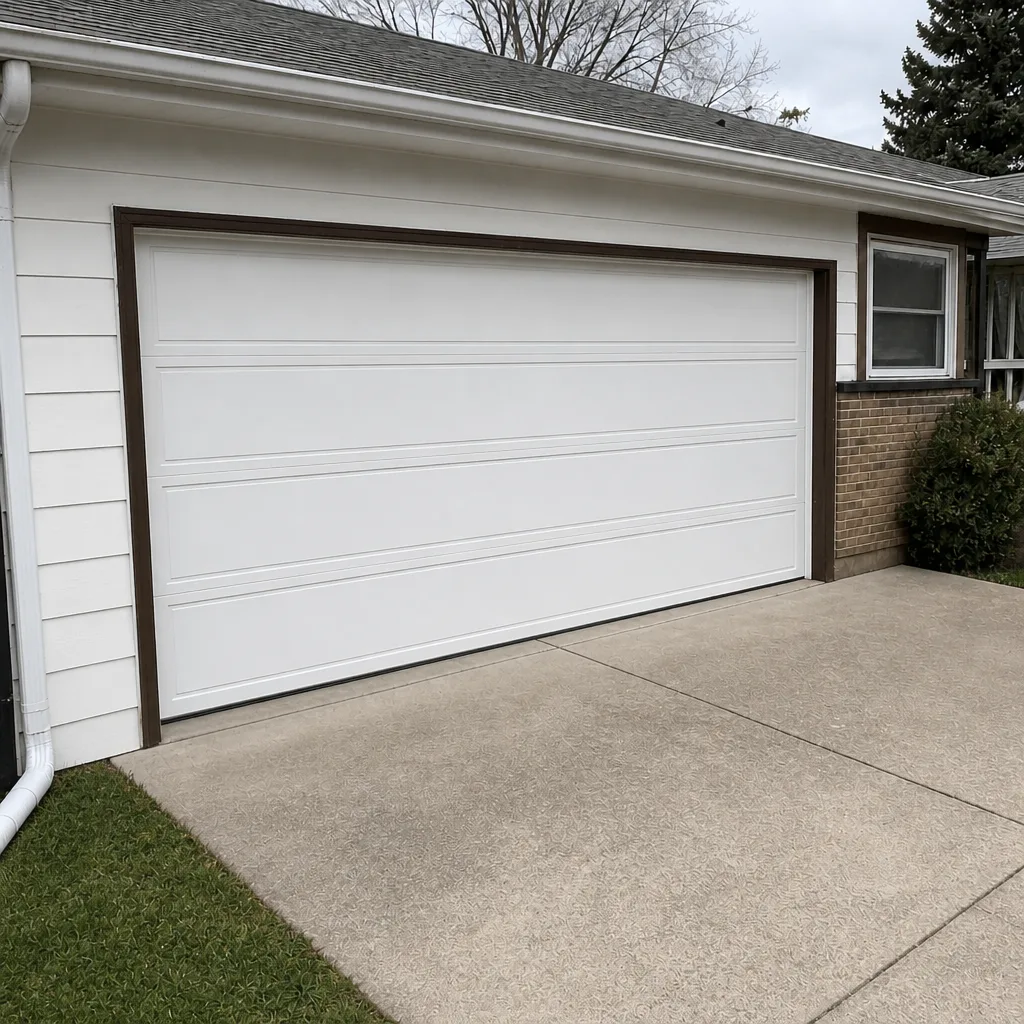 After
When to Call a Professional
Call a professional for any of the following: a broken or visibly damaged spring, a door that won’t stay up when you lift it manually, a cable that’s loose, frayed, or hanging, a door that comes off its track or binds at one side, an opener that reverses without obstruction, or an opener with failed safety sensors. Call immediately if the door is stuck open and won’t close, or if you’ve heard a loud snap from the garage. Those are safety issues, not scheduling conveniences.
Routine maintenance, like lubrication and hardware tightening, is something you can do yourself. Anything involving tensioned springs, cables, or the opener’s electrical components calls for a trained professional, both for your safety and because a misdiagnosis there can cost more than the original repair. Our Garage Door Repair Harvey Park team handles the full system, from the spring to the opener, and we work on the brand already in your garage. Free estimates in Harvey Park – call (833) 319-0790. We answer 24/7. Fast dispatch from 7am to 7pm, Sunday through Friday.
Frequently Asked Questions
It depends on the spring type, whether it’s a single or matched pair, and the cycle rating you choose. The written estimate sets the final price, and we’ll break out parts and labor separately so you can compare it to any other quote. A matched pair typically costs about twice a single spring. Call (833) 319-0790 for an exact quote – estimates are free.
Hire a specialist. Garage doors are a mechanical system under tension wired to an opener, and a generalist usually diagnoses from the piece they know best rather than the whole system. A specialist works on doors as a trade, not a side job, and can often handle diagnosis, parts sourcing, and repair in one visit.
It depends on the job. Routine repairs and part replacements usually don’t require a permit or a general contractor license, but full door replacements and structural work often do. Ask the contractor directly whether your job needs a permit, and verify their state contractor license through the Colorado licensing authority if the work requires one.
If you can’t see parts and labor separated out, or you can’t see a part number for the spring or opener being installed, the quote is missing detail. Ask for it in writing before you approve any work. A quote that says “spring replacement” without a gauge, cycle rating, or written labor line is a placeholder, not an estimate.
Often, yes, for common repairs like springs, cables, and opener issues. Call (833) 319-0790 and we’ll let you know what’s available. We answer 24/7. Fast dispatch from 7am to 7pm, Sunday through Friday. A call outside dispatch hours is booked into the next opening, Sunday through Friday, 7am to 7pm.
No. The written estimate you agree to sets the price, and we confirm that before any work begins. If the diagnosis turns up something the estimate didn’t cover, we tell you first and get your approval before doing anything else. You’re never handed a surprise invoice at the end.
The Bottom Line
Hiring a garage door contractor in Harvey Park comes down to asking better questions than most homeowners do. Confirm they’re a specialist, ask for parts and labor on separate lines, insist on part numbers, and get the warranty in writing. Understand that a $200 spread between quotes usually reflects different scope, not different value. And never touch a tensioned spring yourself. Do those things and you’ll filter out the vague operators before they’re in your driveway. If you’re ready to compare a real, line-item estimate, call (833) 319-0790 for a free estimate. We answer 24/7. Fast dispatch from 7am to 7pm, Sunday through Friday.
Written by the team at Garage Door Repair Harvey Park.